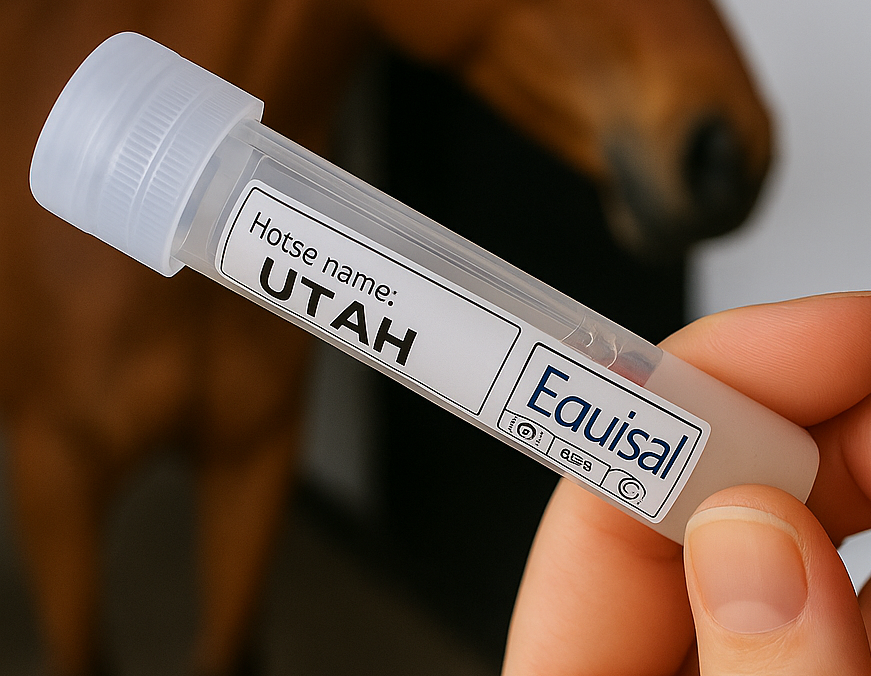
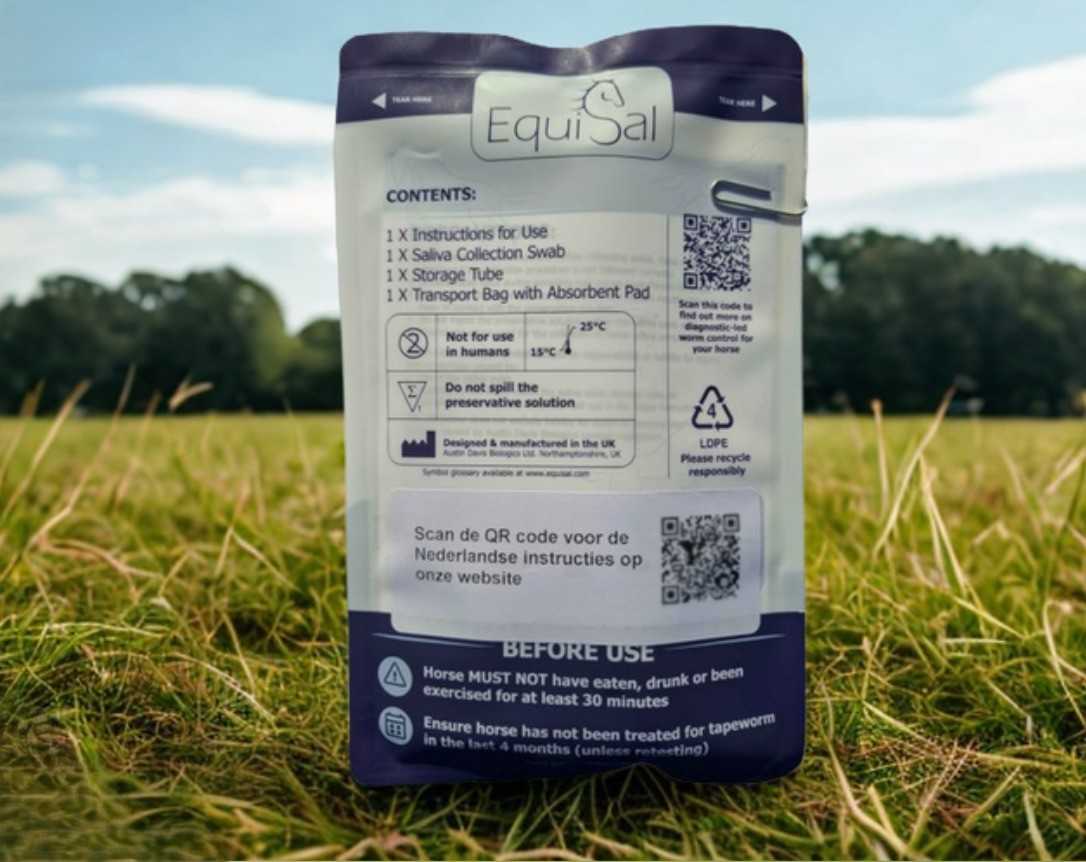
The EquiSal tapeworm test is an innovative saliva test that shows whether your horse has a harmful tapeworm infection.
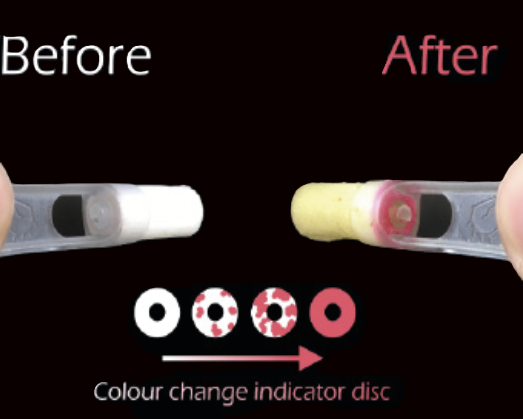
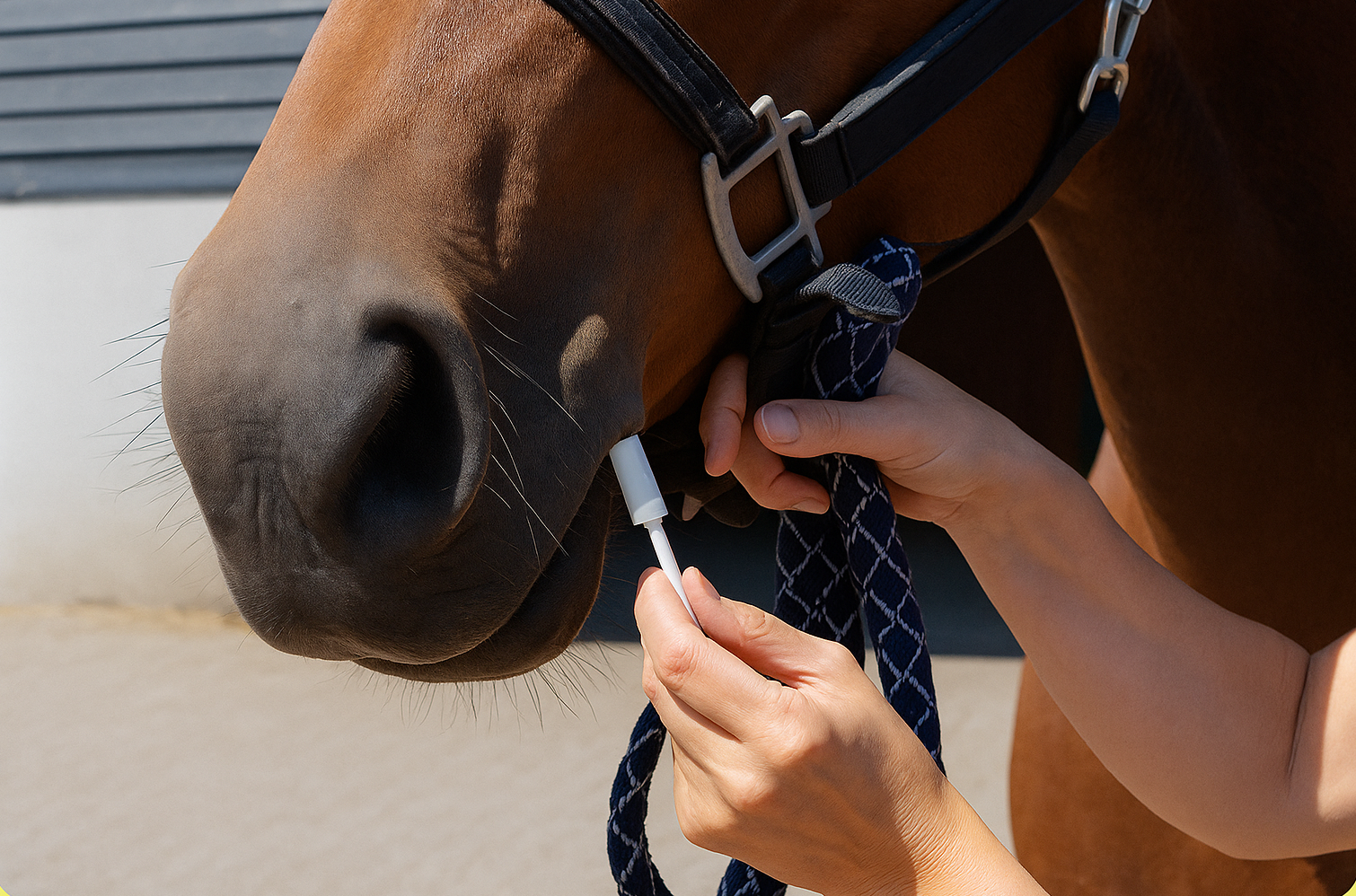
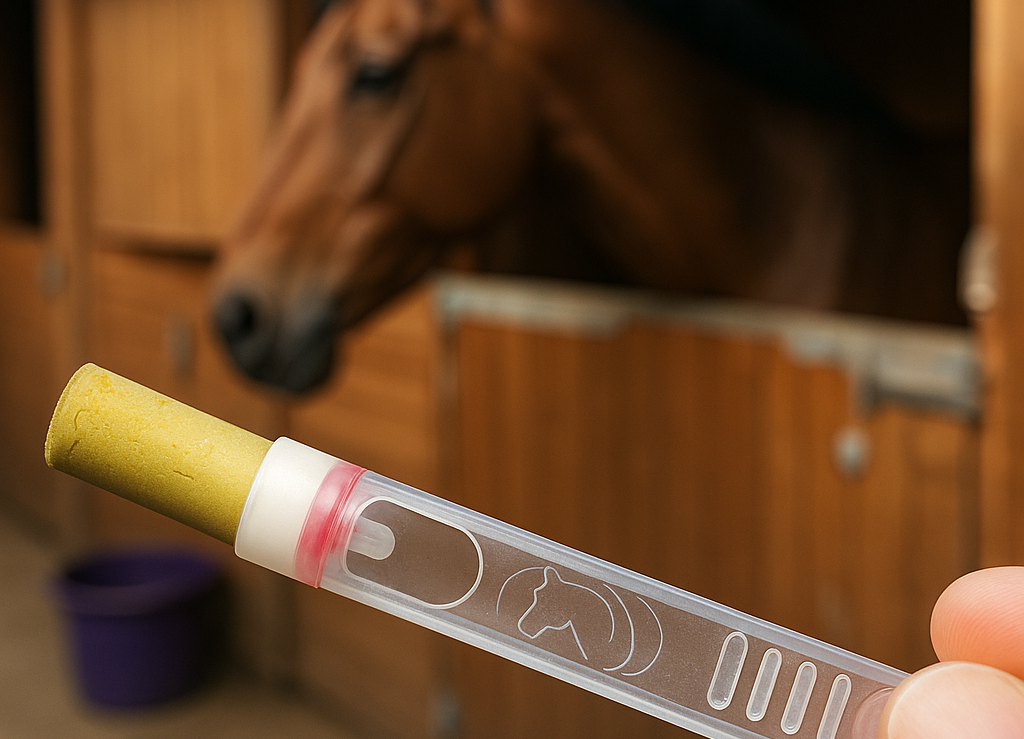
The test is user-friendly. The saliva can be collected by the horse owner using the supplied swab, which changes colour once enough saliva has been collected. The EquiSal saliva test can be used for all horses.
The EquiSal tapeworm test measures the amount of specific antibodies against tapeworm.
The test consists of three components, correcting for the horse’s saliva production and diet.
By using the EquiSal saliva test, you can rule out a tapeworm infection and no longer need to deworm preventively for tapeworm. This prevents your horse from receiving unnecessary medication, helps preserve its natural immunity, and reduces the risk of worm resistance.
Because tapeworms shed their eggs in packets, a fecal test is not suitable for detecting tapeworms. Sometimes tapeworm eggs are found during a regular fecal test, but these are essentially coincidences. The only conclusion you may draw in that case is that the horse does have tapeworms. On the other hand, if no eggs are seen in the feces, we cannot conclude that the horse is free of tapeworms. Due to the way tapeworms release their eggs, there is also no correlation between any eggs found and the severity of infection, unlike with other gastrointestinal worms.
A saliva test, however, can reliably detect tapeworms.
The special preservation fluid was developed in collaboration with a human diagnostic laboratory specialized in saliva testing. The stability of the preservation fluid has been extensively tested. The saliva samples can therefore be sent to the laboratory by regular mail without any problems. The saliva sample remains stable in the preservation fluid for at least three weeks.
If the test is positive, you will receive advice to treat. It is known that a tapeworm infection with more than 20 tapeworms can be pathogenic. However, there is no evidence that lower-level tapeworm infections do not require treatment. Therefore, current advice is to treat every tapeworm infection. If the test is negative, no treatment is necessary.
Our advice is to test for tapeworm twice a year. The best times to do this are late autumn and late winter/early spring. Of course, you can use the test throughout the entire year.
Do you have any further questions? Please do not hesitate to contact our enthusiastic team!

 NL
NL
 DE
DE
 FR
FR
.jpg)