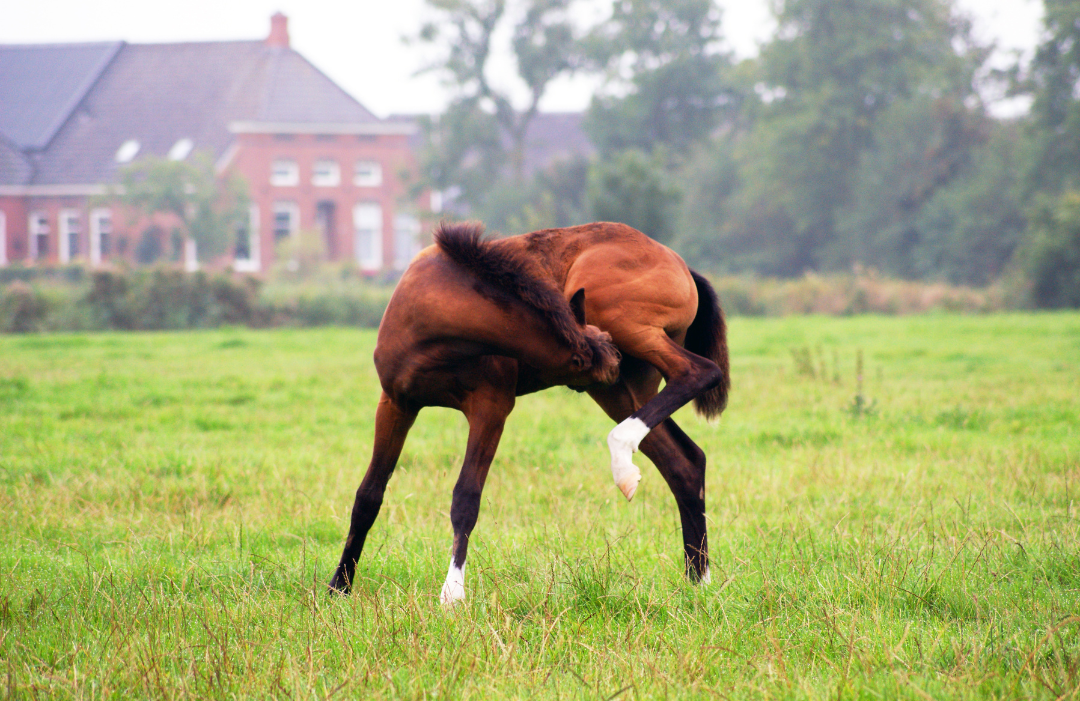
Have you ever heard of the deer ked? These annoying parasites can drive even the calmest horses crazy.
Types of keds There are two types of keds that are most active in different months:
The deer ked prefers roe deer, red deer, and wild boars. You’ll find them mainly in forested areas where these animals live. They are most common in September and October.
The horse ked prefers sheep, cattle, and horses. This fly is most active from May to September and is slightly larger than the deer ked. Both types are not afraid of horses — they can also bite humans and cause the same irritation.
What can you do?
Check your horse thoroughly, especially if it seems restless.
Catch the flies with duct tape and fold the tape to trap them.
Spray the keds with insect spray, alcohol solution, or hairspray to temporarily immobilize them.
Use a fly rug with belly flap — it can help, although flies may still crawl underneath.
Apply Vaseline, lanolin, or oil to the groin, around the genitals, anus, tail base, and udder to prevent the keds from biting.
Keep yourself and your horse safe, and be prepared for these unwelcome visitors!
Bron: De Groene Os
Related Blogs
Worm aneurysm vs Cyathostominosis
Worm aneurysm and cyathostominosis are often confused, but they are two completely different conditions, each with its own risks. In this blog we clearly explain what both problems are, how they develop and why good worm management is so important to prevent them.
How do I interpret the results?
A manure test alone does not determine whether a horse needs treatment. The questionnaire, the horse’s health and age, seasonal parasite pressure, and existing records also help assess whether treatment is appropriate.
My horse tested positive, but does not need treatment – how is that possible?
It can be confusing: you have a fecal test done and the result comes back positive. Yet, the advice is not to treat. How is that possible? We’ll explain.

 NL
NL
 DE
DE
 FR
FR