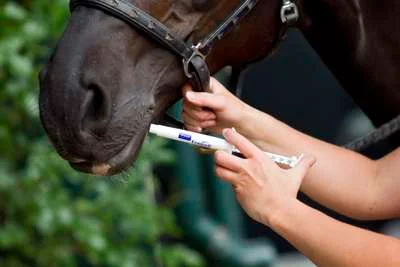
At Worm&Co, you receive tailored advice based on the fecal test. This advice is given based on the results, the horse’s file, questionnaire, age, and environment. Sometimes we encounter cases where a horse owner chooses not to treat, even though the advice is to do so. The reasons vary, such as fear of resistance or the belief that the issue is not serious.
Unfortunately, in the past year, we’ve had several cases where owners did not follow the treatment advice, and the horse developed worm-related symptoms and eventually needed treatment after all.
If you choose not to treat, it’s important that the decision fits the situation. In some cases, treatment may be skipped when the egg count is low, but we advise sending in a new fecal sample after 3 to 4 weeks to check whether your horse has resolved the infection on its own or if the infection pressure is increasing.
Of course, our advice is never given lightly. If you’re unsure, feel free to contact us to discuss. Ultimately, we only give advice, and everyone is free to make their own decision.

 NL
NL
 DE
DE
 FR
FR
.jpg)