Measuring your horse is knowing!

Determining your horse’s weight can be quite difficult, so we’re happy to help.

The end-of-year deworming is approaching, and we often receive the question: how much deworming paste should I give my horse? Of course, it's hard to determine this remotely, but we're happy to help you estimate your horse’s weight.

Carroll & Huntington formula
Below we describe a method to estimate the weight.

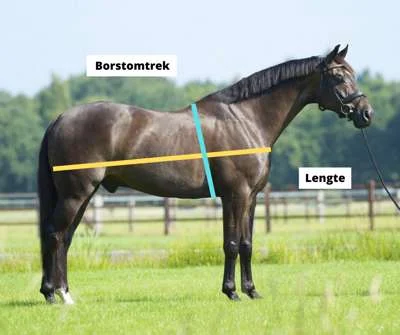
  • Measure the horse as shown in the example photo:
  • Body length in cm (example: 201 cm)
  • Girth in cm (example: 174 cm)

The calculation is as follows: girth in cm² × length in cm ÷ 11,880 = estimated weight (squared means you multiply the number by itself).

In our example: 174 × 174 × 201 ÷ 11,880 = 512 kilos

Related Blogs

How do I interpret the results?

A manure test alone does not determine whether a horse needs treatment. The questionnaire, the horse’s health and age, seasonal parasite pressure, and existing records also help assess whether treatment is appropriate.

Worm aneurysm vs Cyathostominosis

Worm aneurysm and cyathostominosis are often confused, but they are two completely different conditions, each with its own risks. In this blog we clearly explain what both problems are, how they develop and why good worm management is so important to prevent them.

My horse tested positive, but does not need treatment – how is that possible?

It can be confusing: you have a fecal test done and the result comes back positive. Yet, the advice is not to treat. How is that possible? We’ll explain.


WhatsApp