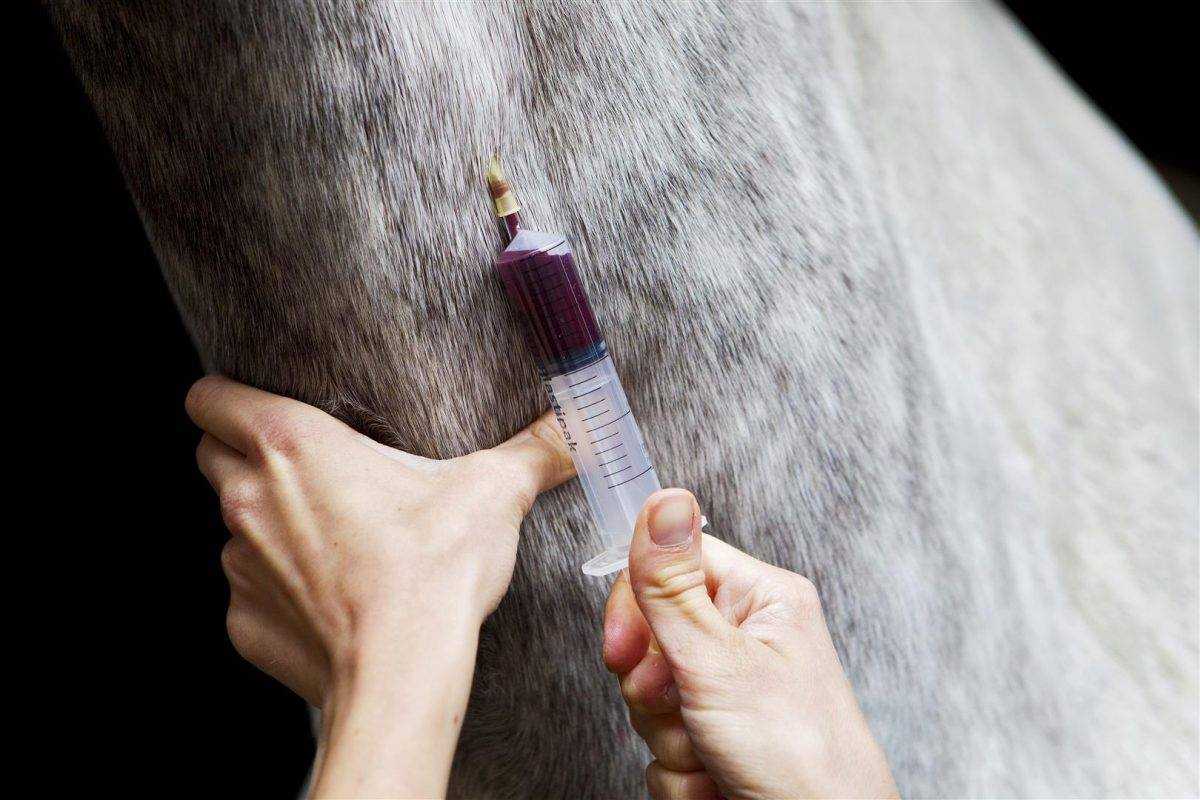
Maybe you’ve experienced it yourself. Your horse wasn’t quite fit, and the vet suggested a blood test.
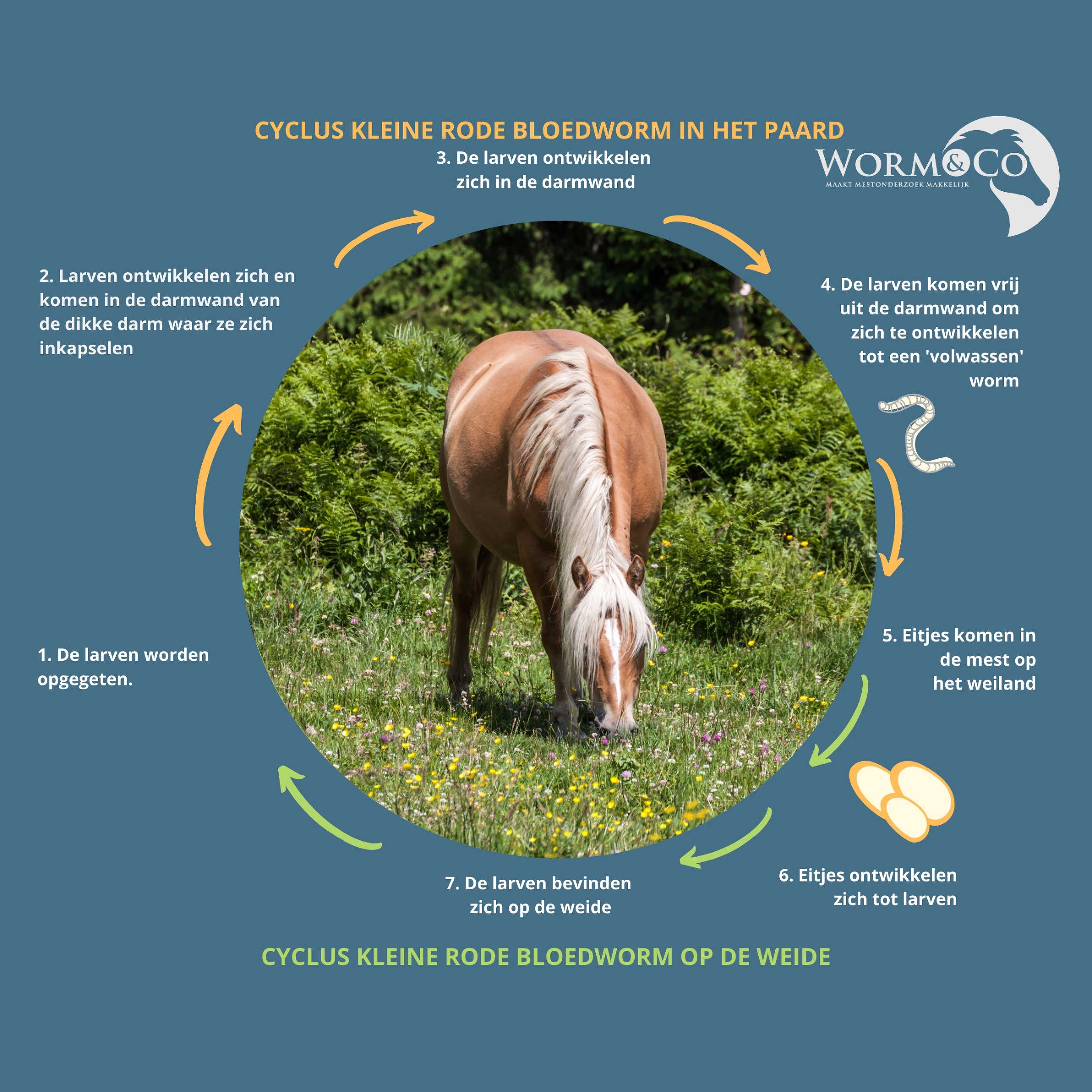
The result of the blood test indicates the presence of small strongyles. Your horse is properly treated, but the symptoms persist. Below is information on the value of blood tests in relation to small strongyles.
Clinical study
Due to the presence of high levels of (beta)globulins in the blood of horses, it is assumed this may indicate the burden of small strongyles.
In a clinical study, 38 horses infected with small strongyles were tested. All horses were treated with different dewormers. After treatment, beta-globulins in the blood were re-evaluated.
It turned out there were no differences in beta-globulin levels at various time points, before and after treatment.
Even in the group of horses treated with moxidectin, which has a lethal effect on encysted larvae, there was no decrease in the beta-globulin fraction after treatment.
Conclusion
It is concluded that the levels of various blood proteins, including beta-globulin, do not indicate a possible small strongyle (bloodworm) infection in a horse.
If elevated beta-globulins are detected in a blood test, this MAY suggest a small strongyle infection — but it could also have another cause. Observe your horse closely and discuss all possibilities with your veterinarian.
Do you have any questions? Feel free to email us at info@wormenco.nl
Source: parasitology laboratory

 NL
NL
 DE
DE
 FR
FR